Archive for the ‘Medical Coding Industry News’ Category

Medical Billing and Coding Industry Predicted to Boom by 2020

Wednesday, December 26th, 2012

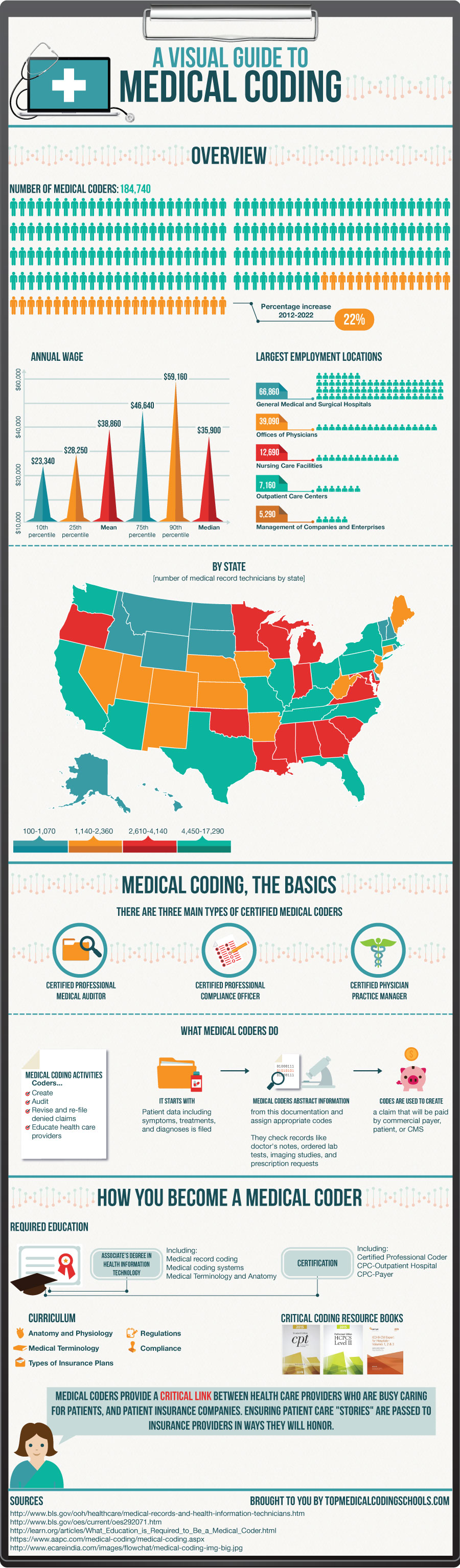
While some industries are stagnant or losing steam in the slowly rebuilding economy, one industry is predicted to grow faster than any other- medical billing and health information.

The Bureau of Labor Statistics projects that job growth in that sector will increase faster than any other occupation at 21 percent by 2020. Salaries for these positions are also expected to increase by over 20 percent over the next five years to match as well; all in all, great prospects for a growing field.

Any explosion in growth is necessarily followed by expansion. Expansion in staff or facilities requires cash on hand, which can be a problem for outsourced medical coding and billing services waiting weeks for payment from clients. Invoice factoring is one financing option that affords this industry flexibility, and the ability to pay obligations in a timely manner. As the industry grows exponentially, so will the cash needs of medical billing and coding businesses- and that is where factoring can help.

For the full article, see A Whopping 21% Increase in Medical Billing and Coding Jobs Salary

Hospitals for Profit or for Help?

Friday, August 17th, 2012

Did anyone see the article A Giant Hospital Chain is Blazing a Profit Trail in the NYTimes earlier this week?

The article talks about HCA’s revamped billing procedures and revised patient screenings that have led them to be extremely profitable health care industry giant during a time when so many of America’s hospitals have been struggling to stay out of the red.

According to the article, “Among the secrets to HCA’s success: It figured out how to get more revenue from private insurance companies, patients and Medicare by billing much more aggressively for its services than ever before; it found ways to reduce emergency room overcrowding and expenses; and it experimented with new ways to reduce the costs of its medical staff, a move that sometimes led to conflicts with doctors and nurses over concerns about patient care.”

What are your thoughts on this article?

Swipe Fees Threaten Merchant-Customer Relationships Nationwide

Thursday, July 19th, 2012

Did any of the small business owners who regularly read The Factoring Blog see the article in The Wall Street Journal today, entitled: The Swipe Fee Conundrum?

We thought our small business factoring readers and Americans everywhere should be concerned about a recent court settlement against major credit card companies that may open “the way for millions of businesses to add checkout fees when customers pay with plastic.”

This surcharge comes as the result of 1-3% charges burdened on businesses by credit card companies. This fee may be passed on to customers, who may remain entirely unaware that they are being charged extra for credit card companies’ profit.

Of course, though most business owners would rather be transparent in dealing with swipe fees, “many don’t want to run the risk of alienating credit-card users” by exposing swipe fees to the public.

The fees, which have been deemed by merchants and customers alike as “petty” is undermining the relationships that business owners have with their clientele, as well as the hard-won credibility that make those relationships work.

According to this article in The Wall Street Journal, “The proposed settlement sets aside $6.05 billion,” and “the biggest portion of the money will likely go to large retailers.”

Small business owners may be fortunate to even receive several hundred dollars from the settlement, making this lawsuit a purely corporate affair.

Supreme Court Stuns Nation with Obamacare Decision

Tuesday, July 3rd, 2012

The outcome appeared uncertain, but in a 5-4 decision, the Supreme Court ruled the Patient Protection and Affordable Care Act to be constitutional in accordance with U.S. tax laws.

Chief Justice John Roberts opined that the individual mandate, the clause compelling all Americans to own some sort of health insurance, was unconstitutional if the penalty took the form of a fine. Instead, if

Americans decided not to follow the individual mandate, they would be taxed in accordance with the burden that any potential uninsured illnesses might pose to taxpayers.

Though, prior to signing the bill into law in March 2010, the president had vehemently denied the bill to be a tax, his wording was corrected by the court on Thursday June 28, 2012.

Beyond compelling Americans to purchase policies from healthcare insurance companies, the bill also limits insurance companies’ rights to severability. The PPACA holds that no insurance company can terminate coverage because of a person’s pre-existing condition.

Limitations upon the rights of private sector insurance firms are subsequently countered by the bill’s expansion of Medicaid. The federal government has offered to fund the expansion in every state, to the tune of 100% of the cost.

The act, pejoratively known as Obamacare, has a host of pros and cons that will be sure to affect the well-being of each and every American. It is unforeseeable how our small business, healthcare factoring clientele will be affected, but we will keep you posted as new information becomes available.

Medical Receivable Factoring vs. Healthcare Factoring

Tuesday, May 1st, 2012

When it comes to factoring in the healthcare industry, there are two different kinds of companies that can benefit from what’s commonly referred to as healthcare factoring and/or medical factoring. Both types of healthcare companies make ideal invoice factoring candidates because both routinely bill creditworthy slow-paying customers. The Marketing Manager at PRN Funding took the time to explain the differences in the video below:

The first variation of the healthcare factoring model involves entrepreneurs who own a service-oriented business within the healthcare industry. Specifically, medical transcription services, medical equipment providers, medical supply companies, medical staffing agencies, temporary nurse registries, outsourced medical coding companies, medical billing services, etc. can all benefit greatly by factoring their invoices. Healthcare factoring can be extremely beneficial for vendors hoping to maintain a positive cash flow when their customers (medical providers) take weeks or months to pay them for their services or goods. Click here to learn more about PRN Funding’s healthcare factoring solution.

On the other hand, medical receivables factoring includes a third party payer (i.e. Medicaid, Medicare or private insurance company) within the medical invoicing process. In this instance, the medical provider is the one who benefits from factoring.

Medical receivables factoring is a great way for medical providers to bridge the cash flow gap that is oftentimes created by slow payments from insurance carriers and other third-party payers.

As experts in the healthcare factoring marketplace, PRN Funding has developed relationships with credible medical factoring companies that specialize in helping hospitals, nursing homes, physicians’ practices, etc. maintain a positive cash flow.

Click here for more information on healthcare factoring vs. medical factoring.

Aging Workforce is Straining Social Security

Tuesday, April 24th, 2012

Did you happen to see the Associated Press article on Monday entitled: Aging workforce strains Social Security, Medicare?

If not, the healthcare factoring specialists at PRN Funding summarized the startling findings below:

Social Security and Medicare, the government’s two largest benefit programs, are in worse shape than previously thought due to the increasing aging population and the slow-rebounding economy. Moreover, Medicare is in the worst shape because of rising health insurance costs.

The predictions from last year was that the Medicare hospital insurance fund for seniors would run out of money in 2024, and Social Security’s retirement fund would run out in 2038, with the disability fund running out of money by 2018.

The latest projections from March indicate that the disability fund would run out of money two years earlier in 2016.

New Medical Billing and Coding Professional Association

Friday, April 20th, 2012

The APMBA (Association of Professional Medical Billers and Administrators) officially opened this week, and they’re accepting memberships to the organization.

What’s more, the new association is offering ½ off the Platinum and Gold memberships until 05/31/2012.

    1. Platinum Membership: $199.00 covers 1 year membership benefits including the CMBA and CMBA-D exam.
    2. Gold Membership: $159.00 covers 1 year membership benefits includes the CMBA exam
    3. Silver Membership: $99.00 membership only does not cover exam (not eligible for ½ off discount)
    4. CMBA-Certified Medical Billing Administrator
    5. CMBA (D) - Certified Medical Billing Administrator (DME)

      Find out more details here.

      CDIA (formerly MTIA) Closing its Doors

      Monday, April 9th, 2012

      Did any of our medical transcription invoice factoring blog readers see the letter that the board members of the Clinical Documentation Industry Association posted on their web site?

      If not, here’s a copy of what’s on the site’s home page:

      Dear CDIA Members and Supporters,

      The Clinical Documentation Industry Association (CDIA) has weathered many financial challenges over the past few years from the significant contraction in the marketplace and overall unhealthy economic conditions. In response, we rebranded the association to expand our reach beyond medical transcription, editing, voice, and speech recognition to encompass every touch point in the clinical documentation continuum. Our flagship event, the CDIA Annual Conference, had broadened the educational program to bring together these complementary audiences.

      Unfortunately, the external factors have become too strong for the association to overcome and this is why we are writing to you today. On behalf of the CDIA Board of Directors, we regret to inform you that the association is closing and the annual conference planned for April 2012 in Baltimore, MD has been cancelled.

      This has been a very difficult decision that the Board did not take lightly. The association’s finances could no longer sustain the organization to serve the members and support the annual conference. Over the next several weeks, CDIA representatives will be winding down the association and information will be sent regarding recent payments made to the association.

      Thank you for your support of CDIA and participation in the association. We encourage you to continue to promote the spirit of CDIA’s mission, values, and advocacy platform as you continue your involvement in other associations, including the Health Story Project (www.healthstory.com) and AHDI (www.ahdionline.org).

      Sincerely,

      The Clinical Documentation Industry Association

      The medical transcription invoice funding specialists asked the president of PRN Funding, Phil Cohen, what his thoughts were on the CDIA’s closing, and this is what he had to say:

      First and foremost, on a personal level, I’m saddened by the announcement. I’ve either exhibited or attended the annual CDIA show since 1992! However, I don’t believe that the association’s closing is any indication that the medical transcription (or clinical documentation industry) is hurting. Rather, it just shows how the amount of mergers and acquisitions have been affecting the industry. To date, there are fewer smaller MTSOs in the industry and there are also fewer large players in the industry. For an association to remain active, viable and financially sound, it needs more contributing members, not fewer.

      QUESTION: What are your thoughts on CDIA’s closing?

      How Was the 2012 AAPC Conference?

      Thursday, April 5th, 2012

      Sharlene George wrote an informative blog post on the 2012 AAPC Conference. She interviewed a couple of attendees to get the “inside scoop,” and this is what she found out:

      Donna Williams, CPC, CPMA, of the Chesapeake, Va., chapter, who was attending her second national conference, had this to say:

      “This was one of the best conferences I have attended. It was well organized.” Ms Williams also mentioned that her favorite session overall was “Understanding Diabetes for ICD-9 and ICD-10″ presented by Sheri Poe Bernard, CPC, CPC-H, CPC-P, CPC-I.

      Moreover, Myra Burk, CPC, CPC-H, from Rockford, Il., who was attending her first conference, loved the different educational choices and especially found it helpful to have payers involved as presenters and participants during sessions. Ms. Burk also attended and enjoyed the popular Anatomy Expo Wednesday where physicians from a variety of specialties provided an insider’s look at the anatomic and physiologic nuances of the human body.

      Sharlene mentioned that there were a couple of conference hiccups, but the overall consensus was that the 2012 AAPC Conference was a good one.

      Next year’s show will be in Orlando, FL from April 14-17.

      Click here to read Sharlene’s entire post: Attendees Conclude AAPC’s 2012 Conference Was Valuable.

      Temporary Hospice Staffing Factoring Case Study

      Thursday, March 29th, 2012

      The temporary hospice staffing factoring specialists at PRN Funding recently invited one of our current hospice staffing clients to “spill the beans” in a tell-all interview about her experiences with using PRN Funding as a medical staffing factor.

      Although the video and printed interview is posted on PRN Funding’s web site, we also included them on The Factoring Blog for all of our medical staffing agency owners.

      Chastity Williams has a big heart, and she had a big dream. As a long term care nurse she had many encounters with hospice nursing. In 2007, there was a tremendous nursing shortage and hospice was a very misunderstood area of health care. Chastity knew she could help make a difference in people’s lives and wanted to start her own hospice temporary staffing agency - Nursing by Demand.

      “Like everyone else, I had an idea and thought I’d open a business. When I started I was all heart and had big ideas for the nursing part, but I didn’t know as much about the business part.” She felt uncertainty as many entrepreneurs do, and wondered how she’d be able to raise payroll.

      “Chastity had a couple clients lined up before she started, but as in many new business situations, they didn’t pay quite fast enough. So she didn’t have the cash on hand to meet payroll. That’s a lot of pressure for a new business,” says Ryan Elliott, her Account Manager at PRN.

      A business loan was out of the question - Chastity was adamant that she didn’t want to start a business with debt. She did some research and came across PRN Funding’s web site as well as some others, and looked into several.

      Click here to continue reading why Chastity decided to choose PRN Funding as her hospice staffing factor.